Table of contents
TL;DR
Berries, particularly blueberries and strawberries, are among the richest dietary sources of anthocyanins, the flavonoid pigments that give them their color. In a prospective analysis of 16,010 women aged 70 and older from the Nurses' Health Study, higher intake of blueberries and strawberries was associated with slower rates of cognitive decline, with the highest-intake group showing a delay in cognitive aging equivalent to up to 2.5 years compared with women who rarely ate berries [Devore et al., 2012, Annals of Neurology]. Berries were consumed roughly once per week or more in the higher-intake groups in this cohort. Smaller randomized trials of blueberry supplementation have found measurable improvements in memory performance among older adults with early cognitive changes [Krikorian et al., 2010, Journal of Agricultural and Food Chemistry]. The proposed mechanism runs through anthocyanins and related flavonoids crossing the blood-brain barrier, reducing neuroinflammation and oxidative stress, and supporting neuronal signaling pathways involved in memory formation. While the evidence is not yet at the level of a large cardiovascular outcomes trial, the consistency between observational cohort data and small intervention studies makes berries one of the more promising foods specifically for brain aging, as distinct from cardiovascular or cancer outcomes.
Do Berries Actually Slow Brain Aging?
The most direct evidence says yes, at least for the rate of cognitive decline measured over time, rather than a single point-in-time cognitive score. This distinction matters: the Nurses' Health Study analysis measured cognitive function repeatedly over years and found that higher berry intake was associated with a slower trajectory of decline, not simply better cognition at one moment. That kind of longitudinal signal is more convincing than a one-off comparison, because it tracks the same individuals over time.
What Does the Landmark Berry and Cognition Study Show?
[Devore et al., 2012, Annals of Neurology] used a semiquantitative food frequency questionnaire administered every four years since 1980 to Nurses' Health Study participants. Starting in 1995 to 2001, cognitive function was measured in 16,010 women aged 70 and older, with follow-up assessments at two-year intervals. Greater intake of blueberries and strawberries specifically, both particularly rich in anthocyanins, was associated with slower rates of cognitive decline after adjusting for multiple potential confounders including age, education, and overall dietary pattern. The authors estimated that the cognitive aging of women with the highest berry intake was delayed by up to 2.5 years relative to women with the lowest intake.
Small Trials Add Mechanistic Support
Beyond the large observational cohort, smaller randomized and pilot trials have tested blueberry supplementation directly in older adults, including some with early memory complaints. [Krikorian et al., 2010, Journal of Agricultural and Food Chemistry] found that daily blueberry juice or supplementation over several weeks improved measures of memory performance in a small group of older adults with early cognitive decline. Trials of this size cannot establish long-term dementia prevention, but they support a plausible near-term cognitive effect that is consistent with the direction of the larger cohort findings.
Flavonoids Beyond Berries
Anthocyanins are one category within the broader flavonoid family, and cohort research on total flavonoid and flavonol intake has also found associations with better preserved cognitive function in older adults. This suggests berries' benefit may be part of a wider pattern in which flavonoid-rich plant foods, including tea, dark chocolate, and colorful vegetables, contribute cumulatively to cognitive resilience, though berries stand out for their unusually high anthocyanin concentration per serving.
How Might Anthocyanins Protect the Aging Brain?
Several mechanisms have been proposed based on laboratory and animal research. Anthocyanins and their metabolites appear able to cross the blood-brain barrier, unlike many other plant compounds, allowing direct interaction with brain tissue. Once there, they are thought to reduce neuroinflammation, lower oxidative stress in neurons, and support signaling pathways involved in synaptic plasticity, the process underlying learning and memory. Berries may also improve cerebral blood flow, an effect observed in some short-term human trials using functional imaging. None of these mechanisms alone fully explains the cohort-level findings, but together they provide biological plausibility.
Which Berries Have the Strongest Evidence?
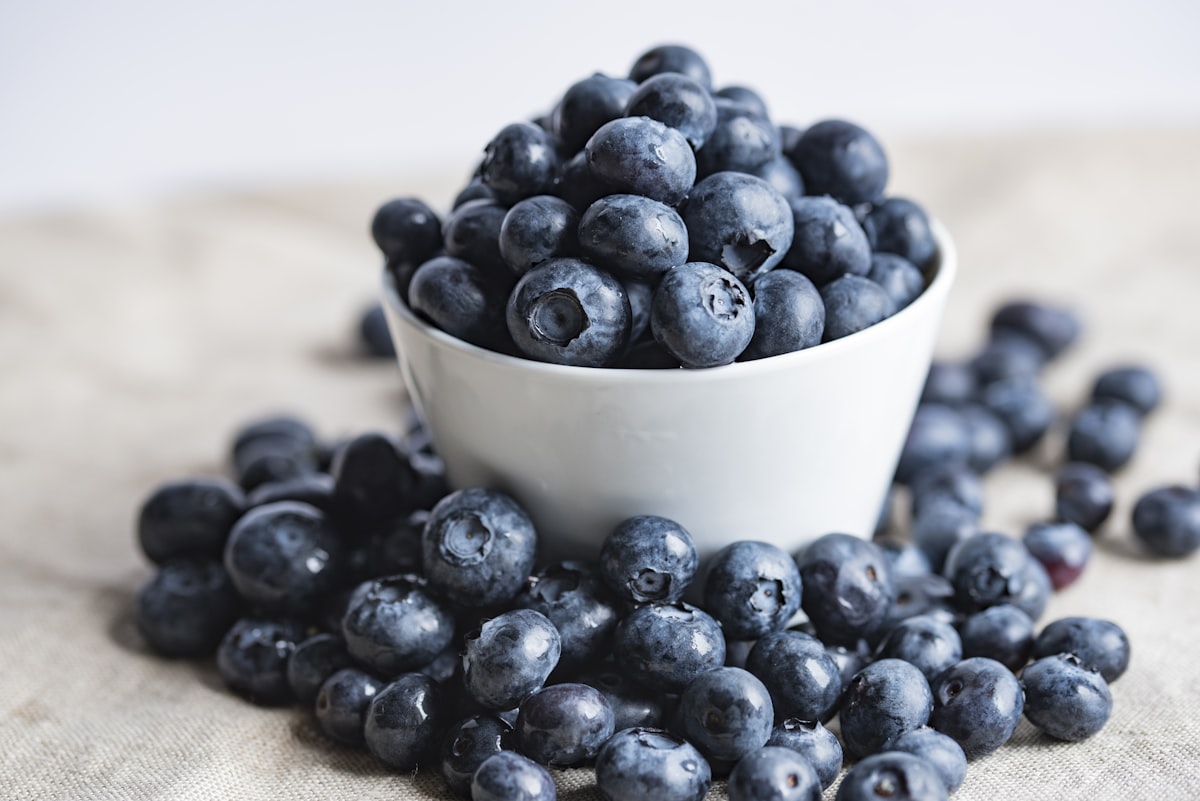
Blueberries and strawberries carry the most direct supporting data, since they were the specific berries measured in the Nurses' Health Study analysis. Blueberries in particular are unusually concentrated in anthocyanins relative to their weight. Other anthocyanin-rich berries, including blackberries, blackcurrants, and dark cherries, share a similar compound profile but have less cohort-level cognitive data directly attached to them specifically. Frozen berries generally retain their anthocyanin content well, since freezing does not meaningfully degrade these compounds, making frozen berries a practical and often more affordable option outside of peak growing season.
How Many Berries Should You Eat?
The Nurses' Health Study associated benefit with berry consumption of roughly one or more servings per week in the higher intake categories, with the clearest benefit in women consuming berries most frequently. There is no officially established optimal dose from randomized trial data at this stage. A reasonable, evidence-consistent target based on current data is a half-cup to one cup of blueberries or strawberries several times per week, incorporated into a broader diet rich in other plant foods.
How Berries Fit Into a Broader Longevity Diet
Berries are one part of a wider plant-forward eating pattern that also includes the cancer-protective compounds discussed in our guide to cruciferous vegetables and cancer risk and the gut-supporting foods covered in our guide to fermented foods and the gut microbiome. Cognitive aging does not happen in isolation from the rest of the body: chronic stress accelerates cellular aging through the mechanisms described in our guide to chronic stress and telomeres, and tracking your own aging trajectory is covered in our guide on how to measure your biological age. Diet and exercise are also intertwined; our exercise-for-longevity protocol covers the movement-based side of brain health.
Frequently Asked Questions
How many berries per week are associated with slower cognitive decline?
The Nurses' Health Study found the clearest benefit in women eating blueberries and strawberries roughly once a week or more, with greater frequency associated with a larger delay in measured cognitive decline.
Are frozen berries as beneficial as fresh?
Freezing does not meaningfully degrade anthocyanin content, so frozen berries are a reasonable and often more practical substitute for fresh, particularly outside of local growing season.
Which berries have the highest anthocyanin content?
Blueberries and blackcurrants are typically cited as among the most concentrated common berries for anthocyanins, though exact values vary by variety, ripeness, and growing conditions.
Can berries help if cognitive decline has already started?
Small trials in older adults with early memory changes have found measurable short-term improvements in memory performance with blueberry supplementation [Krikorian et al., 2010, Journal of Agricultural and Food Chemistry], but berries are not a treatment for diagnosed dementia and should not replace medical evaluation of cognitive symptoms.
How long does it take to notice a cognitive benefit from eating berries?
Small supplementation trials have measured improvements over periods of several weeks to a few months, while the population-level cognitive aging benefit in the Nurses' Health Study reflects sustained intake over years. Both timeframes point toward consistent, long-term intake rather than occasional consumption.